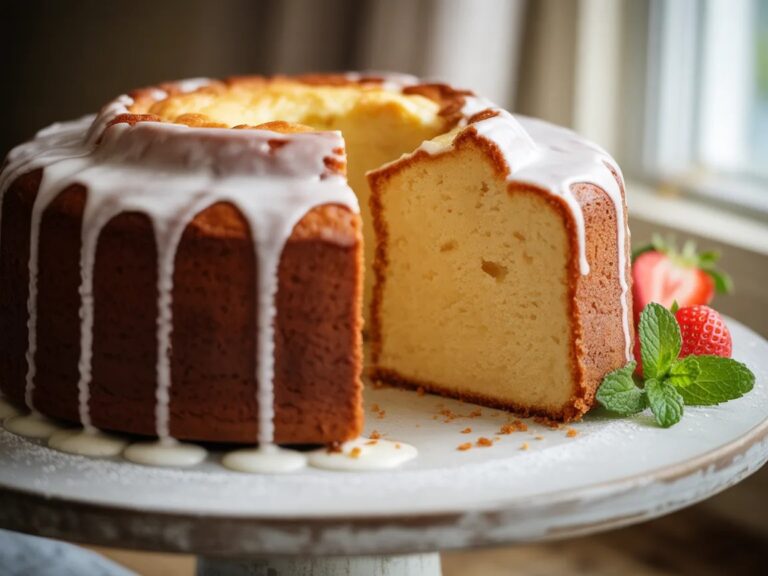
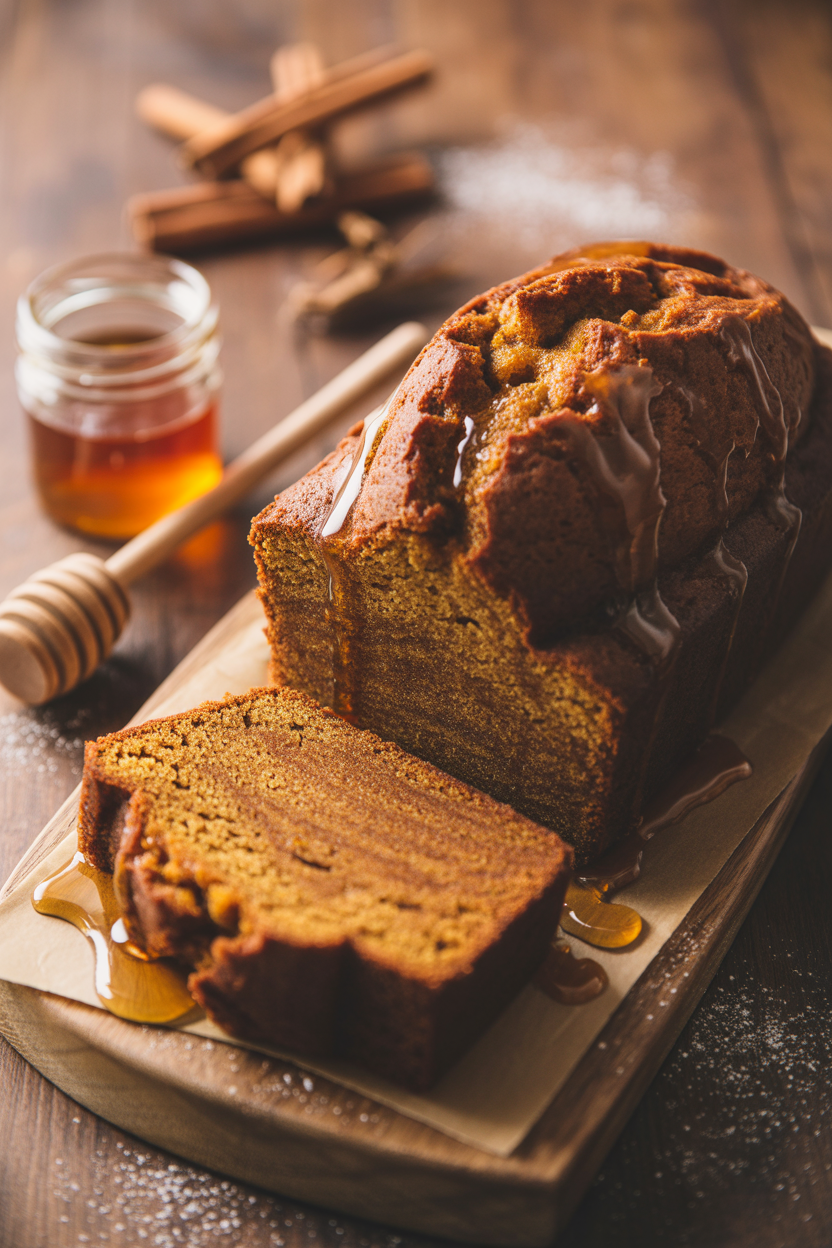
Some cakes try too hard. They’ve got seventeen layers, complicated frostings, and instructions that read like an engineering manual. Honey cake is not that cake. It’s the one that fills your kitchen with the most incredible warm, spiced, caramel-sweet smell the moment it goes into the oven — the kind of smell that makes people wander in from other rooms asking what you’re making. It’s deeply moist, warmly spiced, naturally sweetened with honey, and keeps getting better for days after you bake it. Simple ingredients, one bowl, zero drama. This is the cake that earns you compliments you absolutely did not work hard enough to deserve.
Quick Look of the Recipe
| 🎯 Skill Level | ⏱️ Prep Time | 🍳 Cook Time | ⏳ Total Time |
|---|---|---|---|
| Beginner | 15 minutes | 45 minutes | 60 minutes |
| 🍽️ Servings | 📋 Course | 🌍 Cuisine | 🔥 Calories |
|---|---|---|---|
| 10–12 slices | Dessert / Snack | European / Middle Eastern | ~310 kcal per slice |
Why This Recipe is Awesome
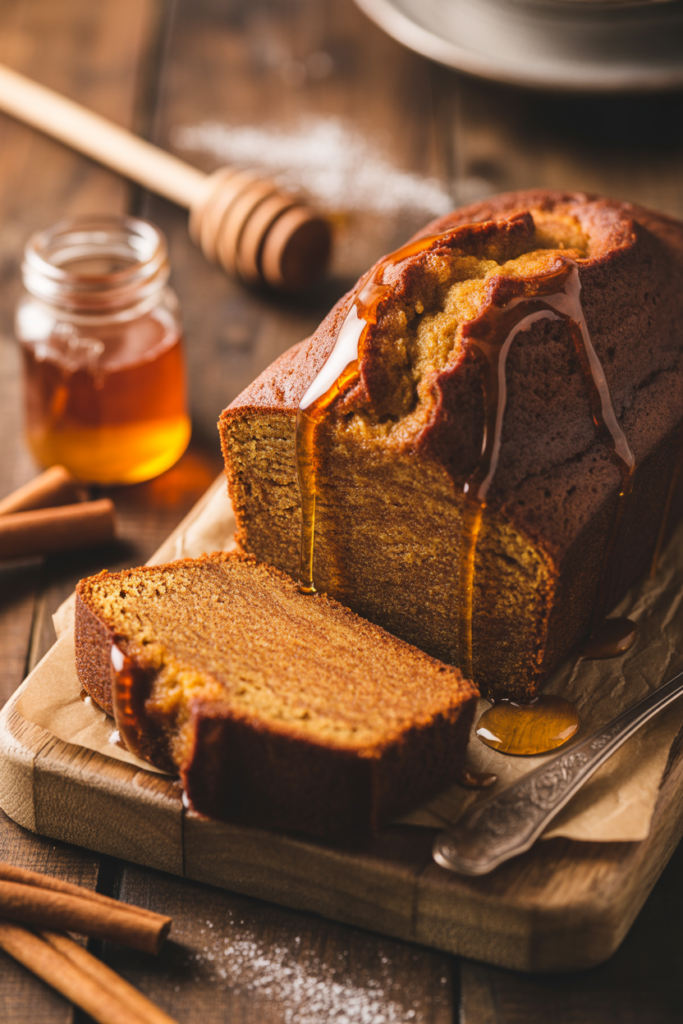
Let’s start with the obvious: honey is doing all the heavy lifting here. It’s the sweetener, the moisture keeper, and the flavor backbone all at once. Unlike sugar-sweetened cakes that taste sweet and nothing else, honey cake has actual depth — floral, warm, slightly caramel-like, with the spices weaving through every single bite. It’s complex in flavor and embarrassingly simple to make.
It’s also a one-bowl recipe. You whisk the wet ingredients together, fold in the dry, pour it into a pan, and bake. That’s genuinely it. No stand mixer required. No creaming butter for eight minutes. No separating eggs into three different bowls for reasons you stopped understanding halfway through. You’ll have it in the oven in 15 minutes flat, and then you just wait while your home smells absolutely incredible. IMO, the waiting is the hardest part — and even that’s not very hard.
Ingredients You’ll Need
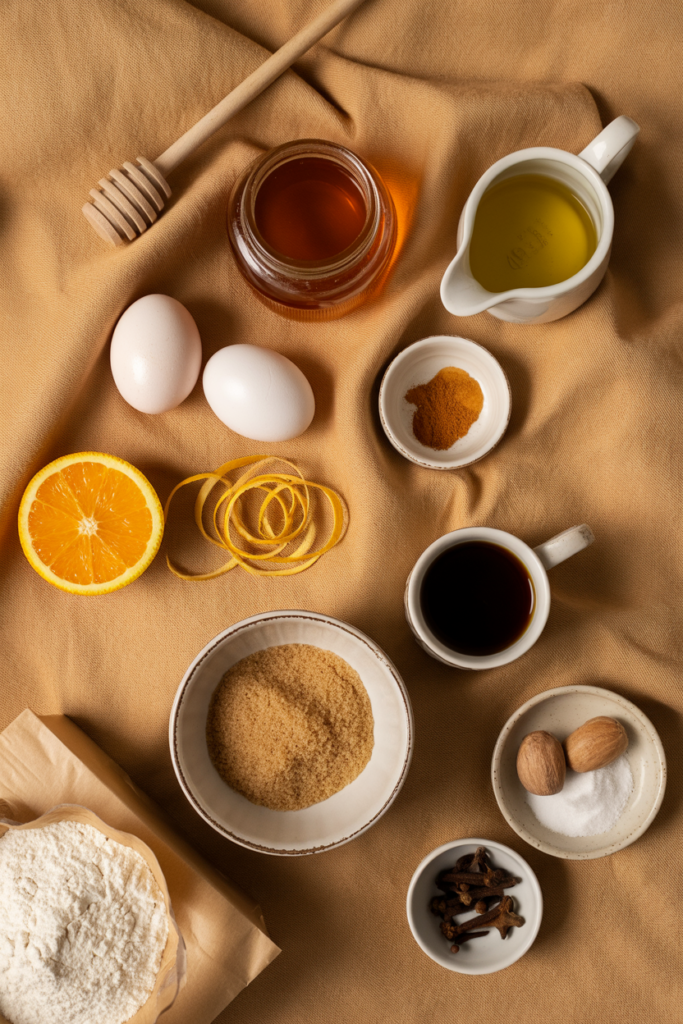
- [ ] 1 cup (340g) good quality honey — the star of the show, so use one you actually like the taste of. A floral wildflower or orange blossom honey works beautifully. The cheap stuff in the bear-shaped bottle is fine too — no judgment here.
- [ ] 3 large eggs — room temperature. Take them out 30 minutes before you start.
- [ ] 1/2 cup (120ml) neutral vegetable oil — sunflower or canola. Keeps the cake moist for days better than butter does.
- [ ] 1/2 cup (120ml) strong brewed coffee, cooled — amplifies the honey flavor without making it taste like coffee. Trust this one.
- [ ] 1/2 cup (120ml) fresh orange juice — adds brightness and helps balance the sweetness.
- [ ] 1 tablespoon orange zest — because if you’re already juicing an orange, you might as well use the whole thing.
- [ ] 2 1/2 cups (315g) all-purpose flour — standard, nothing fancy needed.
- [ ] 1 teaspoon baking powder — for lift.
- [ ] 1/2 teaspoon baking soda — works with the acidity of the honey and orange juice.
- [ ] 1/2 teaspoon fine salt — balances everything and makes the honey flavor pop.
- [ ] 1 1/2 teaspoons ground cinnamon — warm and essential.
- [ ] 1/2 teaspoon ground ginger — adds a gentle, subtle heat that’s completely different from fresh ginger.
- [ ] 1/4 teaspoon ground cloves — use sparingly; cloves are powerful and bossy.
- [ ] 1/4 teaspoon ground nutmeg — rounds everything out beautifully.
- [ ] 1/2 cup (100g) brown sugar — adds a molasses depth that plain honey alone doesn’t quite provide.
Recommended Tools
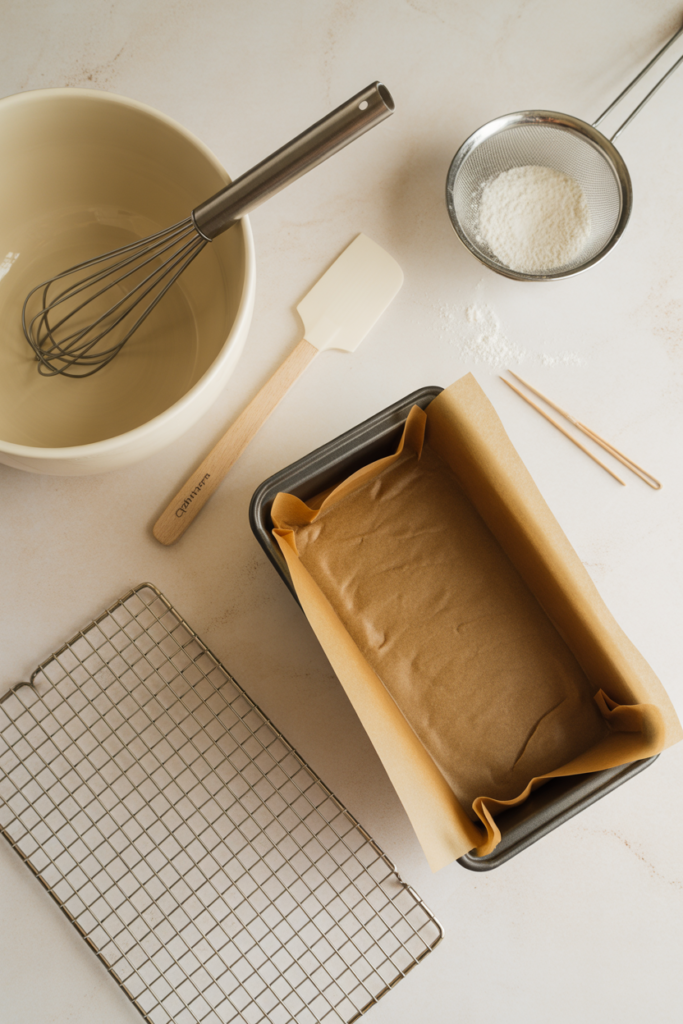
- Large mixing bowl — big enough to hold the full batter comfortably without splashing. One bowl is all you need; don’t complicate this.
- Whisk — for combining wet ingredients smoothly and folding in the dry without overworking the batter.
- 9×13 inch baking pan (or two 9-inch loaf pans) — honey cake batter is fairly liquid and needs a pan with good depth. A loaf pan gives you that classic tall, elegant slice.
- Sifter or fine mesh sieve — for sifting the flour and spices together. Prevents lumps and distributes the spices evenly throughout the batter.
- Rubber spatula — for scraping every last bit of batter from the bowl. Wasting honey cake batter is genuinely sad.
- Cooling rack — let the cake cool properly before slicing or the inside will be gummy and underset.
- Toothpick or cake tester — the only reliable way to know if the center is actually done.
Step-by-Step Instructions
- Preheat your oven to 325°F (165°C). Honey cake bakes low and slow — a higher temperature burns the outside before the center cooks through. Grease your pan well and line the bottom with parchment paper. Honey batters stick enthusiastically.
- In your large mixing bowl, whisk together the eggs, honey, oil, brown sugar, coffee, orange juice, and orange zest. Keep whisking until everything is fully combined and the mixture looks smooth and uniform. The honey can be a little stubborn — give it a good 60 seconds of whisking.
- Sift the flour, baking powder, baking soda, salt, cinnamon, ginger, cloves, and nutmeg directly into the wet ingredients. Sifting the dry ingredients straight into the bowl saves you a second bowl and distributes the spices evenly throughout.
- Fold the dry ingredients gently into the wet with a rubber spatula or whisk. Mix just until no dry flour streaks remain — do not overmix. Overmixing develops gluten and gives you a tough, dense cake instead of a tender one. A few small lumps are completely fine.
- Pour the batter into your prepared pan. It will be quite liquid — that’s normal. Tap the pan gently on the counter a couple of times to release any air bubbles trapped in the batter.
- Bake at 325°F for 40–50 minutes (loaf pans) or 35–40 minutes (9×13 pan). Start checking at the 35-minute mark by inserting a toothpick into the center. It should come out clean or with a few dry crumbs — not wet batter. Don’t open the oven before 35 minutes or the cake may sink in the middle.
- Cool in the pan for 15 minutes, then turn out onto a wire rack to cool completely. Resist slicing it warm — the inside needs time to set. And here’s the thing about honey cake: it genuinely tastes better the next day. The spices deepen, the crumb settles, and the whole thing becomes more complex overnight. Wrap it and wait if you can.
Nutrition Facts
─────────────────────────────────────
       NUTRITION FACTS
─────────────────────────────────────
Serving Size: 1 slice (1/12 of cake)
Servings Per Recipe: 10–12
─────────────────────────────────────
Calories                      310
─────────────────────────────────────
                         Amount  %DV*
Total Fat                  10g   13%
  Saturated Fat              1g    5%
  Trans Fat                  0g
Cholesterol                 47mg   16%
Sodium                     185mg    8%
Total Carbohydrate          52g   19%
  Dietary Fiber              1g    4%
  Total Sugars              34g
    Incl. Added Sugars      28g   56%
Protein                      4g
─────────────────────────────────────
Iron                               8%
Calcium                            4%
Potassium                          6%
Vitamin C                          4%
─────────────────────────────────────
*Percent Daily Values based on a
 2,000 calorie diet.
─────────────────────────────────────
Recipe Variations
- Honey Lemon Cake — Replace the orange juice and zest with an equal amount of fresh lemon juice and lemon zest. Reduce the cinnamon to 1 teaspoon and skip the cloves entirely. The result is brighter, lighter, and more citrus-forward — an entirely different cake from the same base recipe.
- Honey Walnut Cake — Fold 3/4 cup of roughly chopped toasted walnuts into the batter just before pouring into the pan. The nuts add texture, earthiness, and a toasty richness that works beautifully against the sweet, spiced crumb. Scatter a few extra on top before baking for a nice rustic finish.
- Honey Drizzle Glaze Cake — Once the cake is fully cooled, whisk together 1 cup of powdered sugar with 2–3 tablespoons of warm honey and a splash of orange juice until smooth, then drizzle it generously over the top. It adds a glossy, sticky sweetness and makes the presentation look genuinely bakery-level.
Recommended Ways to Serve
- Plain with a cup of tea or coffee — this is the classic way and honestly the best way. Honey cake doesn’t need anything added to it. A warm drink alongside and a quiet moment is the whole experience.
- With a dollop of crème fraîche or whipped cream — the slight tanginess cuts through the sweetness perfectly and adds a cool, creamy contrast to the warm spiced crumb. A light dusting of cinnamon on top makes it look beautiful with almost zero effort.
- As a Rosh Hashanah or celebration dessert — honey cake is a traditional Jewish New Year cake symbolizing a sweet new year. Serve it sliced on a wooden board with fresh apple slices and a small bowl of honey on the side for dipping. The presentation is stunning and the symbolism is lovely.
Storing and Reheating Guidelines
- Store at room temperature wrapped tightly in plastic wrap or in an airtight container for up to 5 days. Honey is a natural preservative — it actively keeps the cake moist and fresh far longer than most baked goods. Day three is genuinely better than day one.
- Freeze whole or in individual slices for up to 3 months. Wrap tightly in plastic wrap first, then in foil, then into a freezer bag. Thaw at room temperature for a couple of hours or overnight in the fridge. It comes back to life beautifully.
- Honey cake doesn’t really need reheating — it’s excellent at room temperature. But if you want it slightly warm, 10–15 seconds in the microwave per slice is plenty. Any longer and it dries out quickly, so keep it brief.
Common Mistakes to Avoid & Fixes
| 😬 Mistake | ✅ Fix |
|---|---|
| Baking at too high a temperature | Honey browns fast — faster than sugar. A high oven burns the outside while the center stays raw. Stick to 325°F and check early. Low and slow is the way. |
| Overmixing the batter | Stir until the flour disappears and then stop. Overmixing builds gluten and turns your lovely tender cake into a dense, chewy slab. A few lumps won’t hurt anyone. |
| Opening the oven door too early | Honey cake batter is liquid and the structure is still setting in the first 30 minutes. Opening the door causes it to sink in the center. Wait until at least 35 minutes before you even look at it. |
| Not lining the pan with parchment | Honey caramelizes on the pan sides and bottom and sticks ferociously. Grease AND line with parchment. Both. Not one or the other. |
| Slicing while warm | The inside is still setting as it cools. Cutting into a warm honey cake gives you a gummy, underset center that looks underbaked even if it isn’t. Cool completely first — wrap it overnight if you can. |
| Skipping the coffee | If the idea of coffee in a cake makes you nervous, understand that you cannot taste it. It’s there to amplify the honey and add depth. Leaving it out makes the cake taste flatter and less complex. Just put the coffee in. |
Alternatives & Substitutions
- No coffee? Use warm water instead. The cake will be slightly less complex in flavor but still completely delicious. Alternatively, use apple juice for a sweeter, fruitier version that leans into the autumnal vibe.
- No orange juice? Apple juice or apple cider is a classic substitute that works beautifully in this recipe and is actually used in many traditional versions. Keeps the same moisture level with a slightly sweeter, softer flavor.
- Want it dairy-free? Great news — this recipe is already dairy-free as written. Vegetable oil instead of butter means no dairy anywhere in the base recipe.
- Gluten-free? A 1:1 gluten-free all-purpose flour blend works well here. The liquid batter and high honey content keep it moist even with GF flour, which tends to be drier in other cakes. FYI, add an extra egg if the texture seems too loose after mixing.
- Want more honey flavor? Use a strongly flavored honey like buckwheat or raw wildflower — they have more complexity and assertiveness than processed honey and make the flavor significantly more pronounced throughout the cake.
- No brown sugar? White granulated sugar works as a direct substitute. You’ll lose a little molasses depth but the cake will still be excellent. A tablespoon of molasses added with white sugar also replicates brown sugar closely.
FAQ (Frequently Asked Questions)
Q. Why does my honey cake sink in the middle? Ans: The three most common culprits are opening the oven too early, underbaking, or overmixing the batter. Make sure you don’t peek before 35 minutes, always do the toothpick test in the very center of the cake, and stir only until the flour disappears. Any of those three things fixed and your cake will come out level and gorgeous.
Q. Can I use any type of honey, or does it matter? Ans: It definitely matters — and also kind of doesn’t. Any honey will make a good cake. But a more flavorful honey (wildflower, orange blossom, buckwheat) makes a noticeably better cake with more complexity and character. If you have something special in the pantry, this is the recipe to use it in.
Q. Does honey cake taste like honey, or is it subtle? Ans: Both, depending on how you look at it. The honey flavor is warm and present throughout — it’s the unmistakable sweetness holding everything together — but it’s woven in with the spices and orange so it doesn’t taste like you poured honey directly into your mouth. It’s layered and complex, not one-note sweet.
Q. Can I make this into cupcakes instead of a loaf? Ans: Absolutely. Fill a lined muffin tin about two-thirds full and bake at 325°F for 18–22 minutes, checking with a toothpick at 18 minutes. You’ll get about 18 honey cake cupcakes that are perfect for sharing and even better for not sharing.
Q. Why does the recipe call for both baking powder and baking soda? Ans: They do different jobs. Baking soda reacts with the acidic ingredients (honey, orange juice, coffee) to create lift. Baking powder provides additional rise and helps the crumb stay tender. Using both gives you a better texture than either one alone. Don’t swap one for the other.
Q. My cake is very dark on the outside but still looks wet inside. What happened? Ans: Your oven runs hot — very common, especially with older ovens. Honey browns significantly faster than sugar, so even a slightly hot oven will darken the outside before the center cooks. Tent the cake loosely with aluminum foil at the 25-minute mark and continue baking until the center passes the toothpick test. An oven thermometer is a genuinely worthwhile investment.
Q. Can I add a frosting or glaze on top? Ans: You can, but honey cake genuinely doesn’t need it. The honey drizzle glaze variation mentioned above is lovely if you want something on top. A traditional cream cheese frosting also works beautifully for a richer dessert version. But plain? Dusted with powdered sugar and served with tea? That’s honestly the best version of this cake.
Latest Articles
-
The Homemade Funfetti Cake That Makes Every Day Feel Like a Birthday
-
🍓 Berry & Bunting: Strawberry Kitchen Decor That Puts a Sweet Red Ripple Through Every Corner
-

The Crunchiest Air Fryer Potato Chips You’ll Ever Make at Homeere’s your
-
Barbie Cake: The Glamorous, Pink, Show-Stopping Birthday Cake That’s Actually Doable at Home
-
Instant Pot Chicken: The One Recipe That Makes Your Pressure Cooker Worth Every Penny
-
Final Thoughts
Honey cake is one of those timeless bakes that earns its place in your permanent rotation quietly and confidently. It doesn’t shout for attention — it just shows up, smells incredible, tastes better the next day, keeps well all week, and makes everyone who tries it genuinely happy. That’s a pretty remarkable thing for a one-bowl recipe with pantry ingredients.
Make it on a Sunday afternoon. Wrap it overnight. Slice it with your morning coffee on Monday and feel unreasonably good about your life choices. Share it, bring it to something, or keep the whole thing to yourself — all valid options, zero judgment.
Now go impress someone — or yourself — with your new culinary skills. You’ve earned it! 🍯✨